
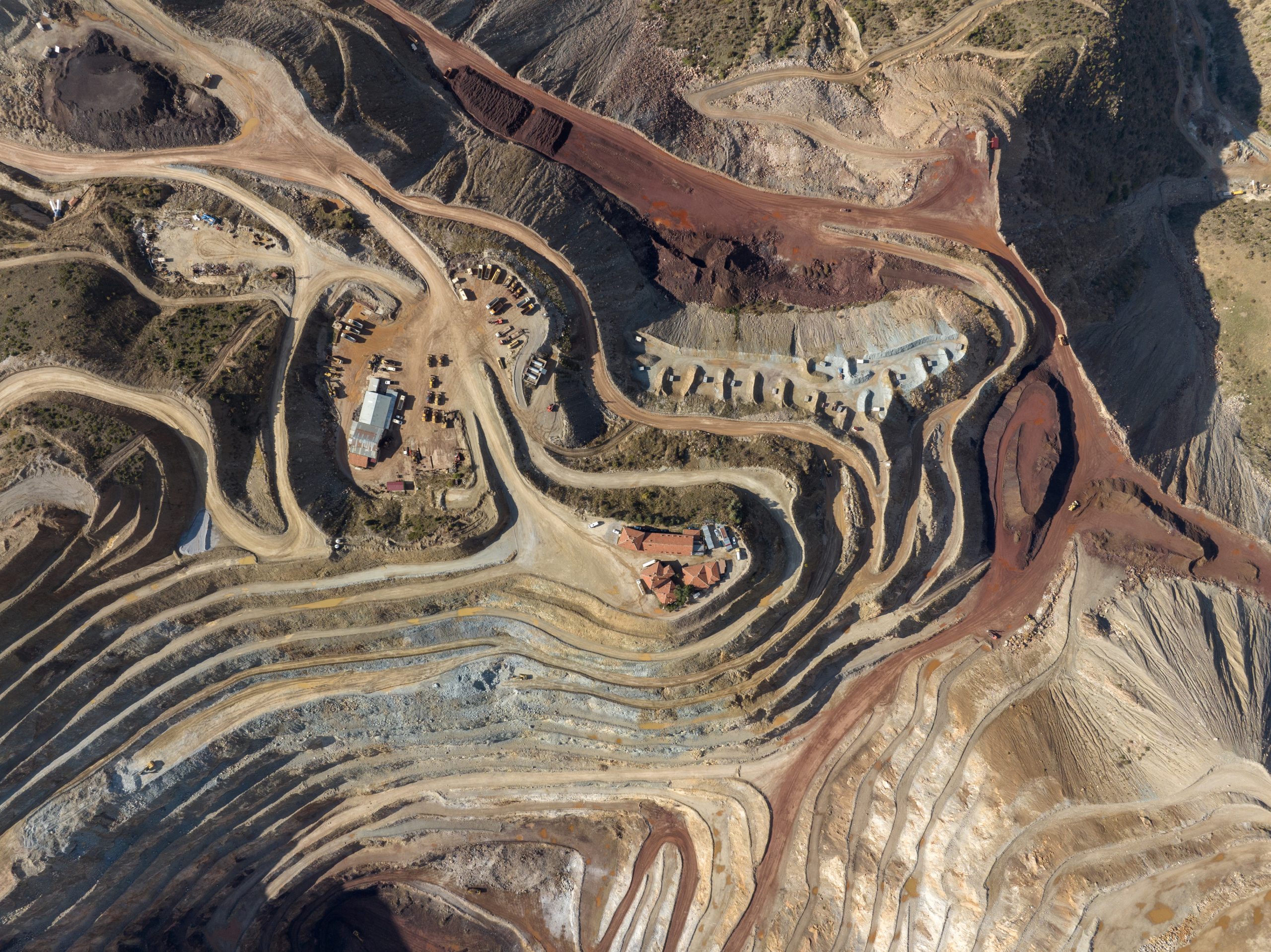
Turkey holds one of the world’s richest natural stone reserves and plays a significant role in global marble production. Marble quarries, concentrated mainly in the Aegean, Marmara, and Central Anatolia regions, are typically operated using the open-pit method. In these quarries, diamond wire cutting machines are used to extract large blocks without damaging the natural structure of the stone. Controlled cutting techniques ensure that the marble is removed in intact blocks, minimizing cracks and preserving quality. Once extracted, these blocks undergo initial quality checks before being transported to processing facilities.
At the factory, marble blocks are cut into slabs using large industrial saws. During this stage, the blocks are sliced into specific thicknesses, followed by various surface treatments. Processes such as polishing, honing, brushing, or sandblasting reveal the stone’s natural texture and color. Additionally, reinforcement techniques like resin application may be used to enhance durability and structural integrity. These steps prepare the marble for both aesthetic appeal and technical performance in architectural applications.
In the final stage, processed marble is cut and shaped according to project requirements and applied in a wide range of architectural and interior design contexts. From flooring and wall cladding to staircases, kitchen countertops, and decorative elements, marble finds its place in diverse settings. Exported from Turkey to all over the world, it is used in projects ranging from hotels to public buildings, bringing the timeless elegance of natural stone into modern spaces. Thus, marble becomes part of a remarkable journey that spans millions of years—from its natural formation to its role in contemporary architecture.