
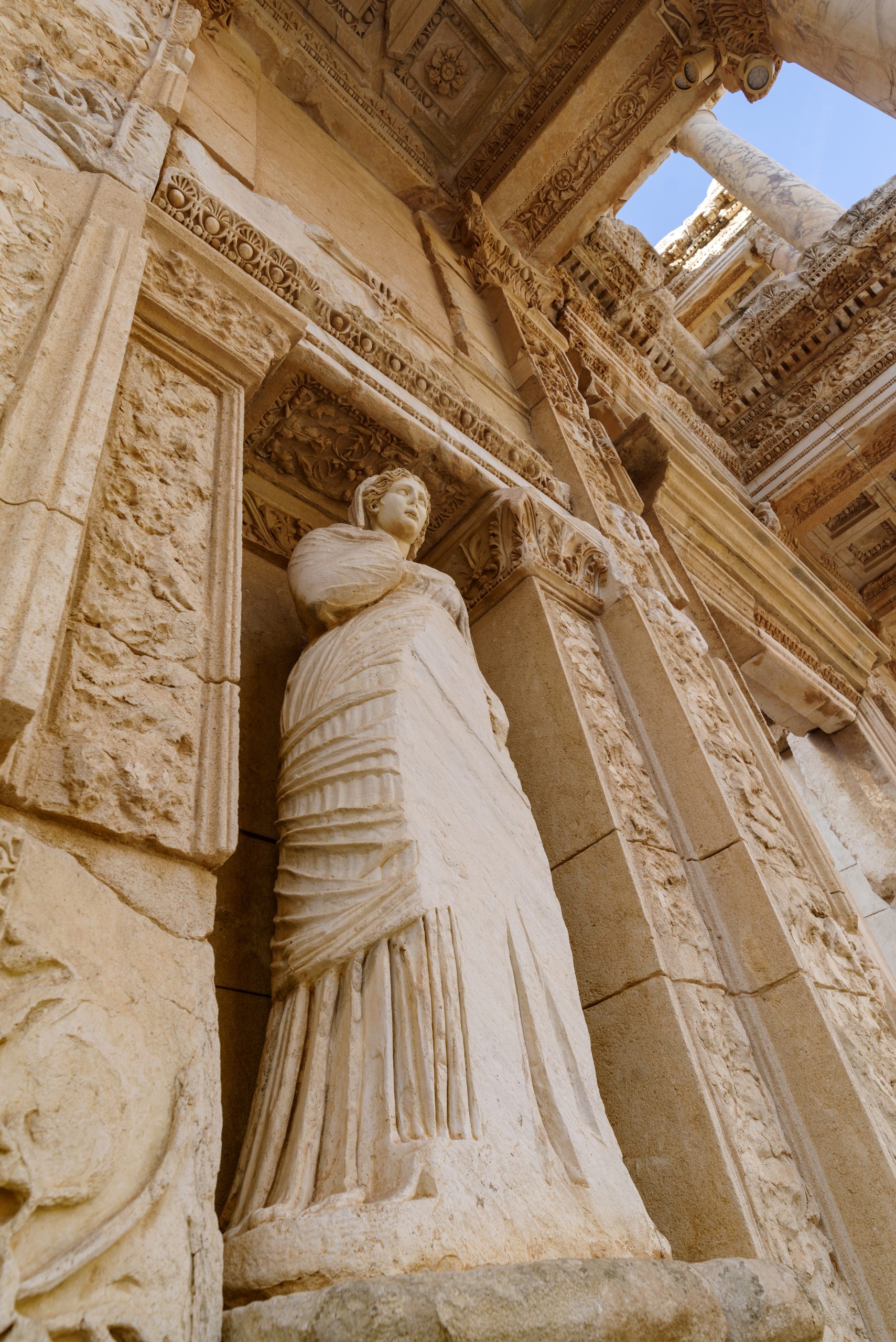
Celsus Library stands as one of the most remarkable structures of the ancient world, built in the 2nd century AD during the Roman Empire. Located in the ancient city of Ephesus, this monumental building was commissioned by the son of Tiberius Julius Celsus Polemaeanus in honor of his father, a Roman governor. Serving both as a library and a mausoleum, the structure functioned as a major center of knowledge, believed to have housed around 12,000 scrolls. Its grand two-story façade, adorned with columns, niches, and statues, exemplifies the aesthetic and engineering excellence of Roman architecture.
The natural stones used in its construction, particularly marbles quarried from the Afyon-İscehisar region (ancient Dokimeion), are closely associated with the same geological origins as what is today commercially referred to as Affumicato stone. These marbles, valued in antiquity for their durability and distinctive veining, were widely used in prestigious structures across the Roman Empire. In this sense, the Celsus Library is not only an architectural masterpiece but also a powerful testament to the historical continuity of Anatolia’s natural stone heritage. Its impressive façade, still standing today, continues to represent a unique intersection of architectural excellence and material culture.
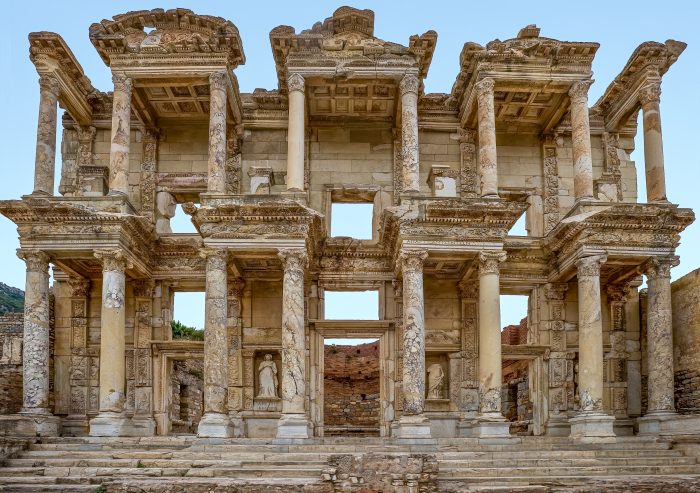
Celsus Library | Ephesus